Tuesday, January 22, 2013

LG: Nexus 4 production will pick up next month

Leave a Comment

Ever since the day the Nexus 4 was officially made available, Google and LG have been struggling to keep up with demand. Google has recently blamed LG for the Nexus 4 scarcity, but according to LG, production was in accordance with figures provided by Google.

As such, LG France blames Google for the current shortage, since the predictions given by Google on the basis of previous Nexus sales turned out to be lower than the actual demand. LG France has since increased the production scale and expects the "market strain" to be gone by next month.

LG has also denied reports suggesting that the Nexus 4 was sold at a loss and the company claims to have reached an agreement earlier on a reasonable price with Google.

Source ; http://www.gsmarena.com/
Read More...

3D printer to carve out world's first full-size building

Leave a Comment

Sure, we've heard of 3D-printed iPhone cases, dinosaur bones, and even a human fetus -- but something massive, like a building?

This is exactly what architect Janjaap Ruijssenaars has been working on. The Dutch native is planning to build what he calls a "Landscape House." This structure is two-stories and is laid out in a figure-eight shape. The idea is that this form can borrow from nature and also seamlessly fit into the outside world.

Ruijssenaars describes it on his Web site as "one surface folded in an endless mobius band," where "floors transform into ceilings, inside into outside."


The production of the building will be done on a 3D printer called the D-Shape, which was invented by Enrico Dini. The D-Shape uses a stereolithography printing process with sand and a binding agent -- letting builders create structures that are supposedly as strong as concrete.

According to the Los Angeles Times, the printer will lay down thousands of layers of sand to create 20 by 30-foot sections. These blocks will then be used to compile the building.

The "Landscape House" will be the first 3D-printed building and is estimated to cost between $5 million and $6 million, according to the BBC. Ruijssenaars plans to have it done sometime in 2014.

Source : http://news.cnet.com/
Read More...

Huawei unveils Ascend G615: 4.5-inch 720p screen, 1.4GHz quad-core processor

Leave a Comment
Huawei unveils Ascend G615: 4.5-inch 720p screen, 1.4 GHz quad-core processorHuawei's just unveiled the Ascend G 615 (not to be confused with the G 520) in Germany, and it's packing a 4.5-inch 720p IPS display and 1.4GHz quad-core processor for 299 euros. In addition to the silicon, 8GB of built-in storage, 1GB of RAM and a microSD slot hide behind the 330 ppi display. As for optics, the phone carries a 1.3-megapixel front-facing cam and an 8-megapixel shooter accompanied by a dual-LED flash, and records 1080p footage. In terms of connectivity, the device features support for WiFi, Bluetooth and pulling down 21Mbps over HSDPA. Next month, the G 615 will be served up in Germany with Ice Cream Sandwich onboard, but Huawei says the hardware will be updated to Jelly Bean at some point in March. There's no word on a US release, but it's expected to hit the road for a few international markets in short order. If Huawei's latest offering strikes your fancy and you call Deutschland home, hit the source links for more details.

Source : http://www.engadget.com/
Read More...

Sunday, January 20, 2013

Microsoft blazes trail to next PC

Leave a Comment

Microsoft Surface Pro: the design isn't perfect, but the fact that it can function as a standalone tablet and is thin and light puts it ahead of the convertible-laptop pack.Microsoft Surface Pro: the design isn't perfect, but the fact that it can function as a standalone tablet and is thin and light puts it ahead of the convertible-laptop pack.

PC makers take note. Microsoft is pioneering the next PC.
Here are two simple reasons why the Surface Pro makes a good case as the template for the new PC. One, Microsoft realized that the device's electronics should go behind the glass, not under the keyboard. Two, the device uses a real processor.

Let's address the electronics first. Most of the newfangled laptops I saw at CES were convertibles. That is, the displays are not detachable because the core electronics are under the keyboard, just like your father's laptop.

And most of them were unimpressive. The mechanics necessary to flip and/or slide the screen and convert the laptop to tablet mode were more often than not kludgy and some seemed destined for mechanical problems down the pike.

And the more problematic designs weren't thin or light, either. At least not when compared with popular tablets like Apple's iPad or Google's Nexus.

One of the few exceptions -- as I noted before -- was the HP EliteBook Revolve. That 11.6-inch design was about as well conceived as a convertible can be.

But there's a reason for that: HP has been building Windows convertibles for ages. The EliteBook 2700 series and its progenitors have been around since the dawn of Windows XP. So, HP has this down to a science.

Sony Vaio Duo 11 convertible: The apparatus to support the display in tablet mode isn't exactly elegant.But, again, that's a rare exception at present. The future leans more toward a PC with the electronics behind the glass. And there's no better example right now than the Surface Pro.

Microsoft was bold enough to go with a mainstream third-generation Core Intel "Ivy Bridge" chip, not the slower Atom processor that most Windows 8 tablet and detachable makers have opted for.
Yeah, the battery life won't be great, but Microsoft, I think, knew (rightly so) that it would be crucified if it opted for the performance-challenged Atom chip, which isn't up to the task of running serious desktop applications on Windows 8.

Remember the netbook? That's one way to look at the first crop of Atom-based Windows 8 tablets: a netbook in tablet clothing. Microsoft didn't want to go there.

And give Lenovo some credit too. It showed off the ThinkPad Helix detachable at CES that separates from the base to become a full-fledged Ivy Bridge-based tablet, not unlike the Microsoft Surface Pro.
And Intel, I think, in its heart of hearts knows Atom isn't really up to the task. Thus, the revelation at CES of the most power-efficient Ivy Bridge yet. One of Intel's goals is to get these new Ivy Bridge chips -- as well as upcoming "Haswell" chips -- behind the glass, as Intel's Adam King told me at CES.

So, I would expect to see an increasing number of Windows 8 tablets and/or detachables sporting Intel's mainstream Haswell Core processors later this year.

And battery lifd will improve with Haswell. I would be fine with a Windows 8 tablet packing a real Intel chip that gets six hours of battery life. And a Haswell-based Surface tablet should meet or exceed this.

Sony Vaio Duo 11 convertible: The apparatus to support the display in tablet mode isn't exactly elegant.

Source : http://reviews.cnet.com/
Read More...

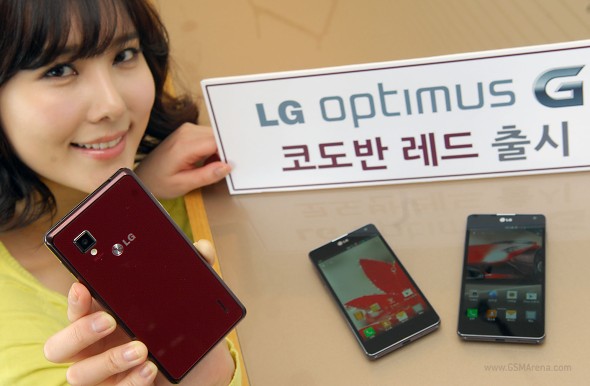
LG sells 1 million Optimus G units and counting

Leave a Comment

LG just announced it has sold worldwide more than a million units of its flagship smartphone - the Optimus G. A similar recent announcement put their L-series sales in the range of 10 million.

The LG Optimus G sale numbers come in a stark contrast with Apple and Samsung flagship sales, but then again, there's a reason these guys are high on the list of the top mobile phone manufacturers.

Other reports claim that LG has sold a total of 55 million handsets in 2012 but plans on boosting their sales up to 75 million in 2013.

LG has had some troubles in the past few years, but their last Q3 results have shown the company is back on its feet, ready to fight back the big dogs.

A leak from earlier today, showing the LG Optimus G Pro, may suggest they already have the right weapon in their armory.

Source : http://www.gsmarena.com
Read More...

Kim Dotcom's Mega cloud storage launches for early adopters

Leave a Comment
Kim Dotcom's Mega cloud storage launches for early adopters, teases 4TB for big spendersMegaupload founder Kim Dotcom has been promising what's almost a sort of renaissance through his Mega cloud storage service. Now that it's open to the first wave of users, we have an inkling of what that strategy shift entails. Mega is currently just a simple-to-use parking place for data with a relatively large 50GB of storage in a free tier. However, it may grow quickly: there's promises of Google Docs-style editing, instant messaging and mobile access, among other plans. Eventual paid plans will offer considerably more storage of between 500GB for €10 per month ($13) to 4TB for €30 ($40), albeit with a bandwidth cap of twice the storage at any given level. As such, Mega is mostly a bundle of potential -- but it may stand out from the pack if ambition matches reality.

Source : http://www.engadget.com/
Read More...

Saturday, January 19, 2013

Windows Phone 8 'Portico' update rolls out to Lumia 920 and 820

Leave a Comment

The AT&T version of the Lumia 920 and Lumia 820 received the Windows Phone 'Portico' update back in December, along with the HTC 8X. The same update has now started rolling out to the international version of the Nokia handsets.

The Portico update brings with it some much needed improvements to the performance of these devices. Nokia has improved the camera performance with this update, reducing the blur in some of the daylight images. Along with that this update also brings with it the ability to keep the device connected to the Wi-Fi even when the screen switches off, ability to reject calls with an SMS and Select All and drafts functionality for SMS.

The update is now slowly rolling out internationally and is expected to be completed by mid-March.

Source : http://www.gsmarena.com/
Read More...
.